Who Are You Today? Inside Gen Z's Double-Life Personality Era
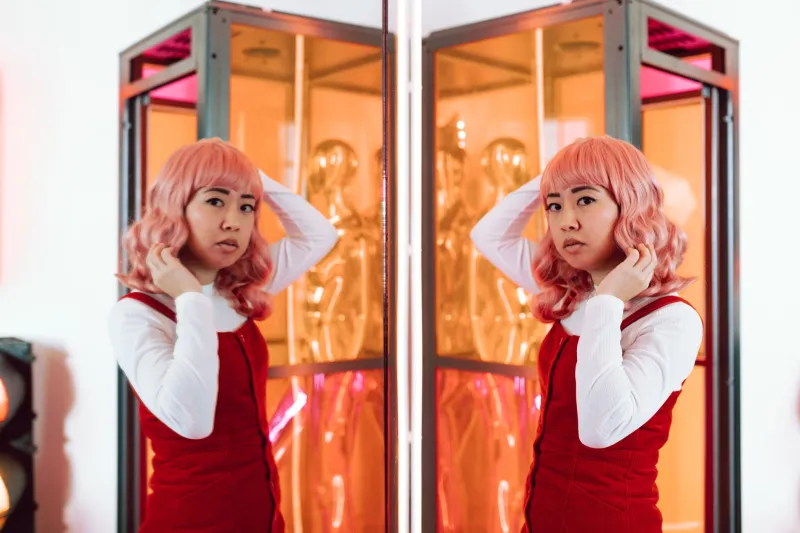
Ricko Ricko has always operated on a simple principle: one is fine, but two is the whole point. Turns out, Gen Z has been running this same playbook with their actual personalities for years now, and the results are equal parts fascinating and deeply, hilariously chaotic.
We're living in the age of the dual persona. The finsta and the main. The "real me" and the "brand me." The person you are at work and the unhinged alter ego you've given a separate TikTok account and a villain origin story. Gen Z didn't create the concept of having two sides — that's been a human specialty since forever — but they did turn it into an aesthetic, a content format, and occasionally a full-time job.
The Finsta-to-Alter-Ego Pipeline
It started, more or less, with the finsta. For the uninitiated: a "finsta" is a fake Instagram account (the name is a portmanteau of "fake" and "Instagram") where users post the unfiltered, chaotic, oversharing content they'd never put on their main. Your main account is the highlight reel. Your finsta is the blooper reel, the rant, the 11 PM photo of your ceiling captioned "thoughts?"
What began as a way to escape the performance pressure of curated social media has evolved into something far more intentional. Gen Z creators are no longer just hiding their messy selves on private accounts — they're building second selves and deploying them publicly with strategic precision.
Enter the alter ego era.
Creators across TikTok and YouTube are launching named, costumed, fully scripted alternate personalities. Some are satirical characters. Some are idealized versions of themselves. Some are, frankly, just the creator with a wig and a different energy, which turns out to be enough. The audience loves it every single time.
"Twice as Fun" as a Lifestyle Choice
So what's actually driving this? We talked to a handful of content creators — ranging from micro-influencers with 20K followers to mid-tier creators nudging toward a million — and the answers were surprisingly consistent.
"My main account is kind of aspirational," said one lifestyle creator based in Austin who asked to remain anonymous because, and we quote, "my alter ego has beef with my main account's vibe." "But my alter ego account is where I actually get to experiment. She's louder. She's messier. She says the stuff I think but wouldn't post under my real name."
This split isn't just creative — it's also strategic. Creators report that their alter ego content often outperforms their polished main content in engagement, which tracks perfectly with everything we know about authenticity and the psychology of the retry (see our other article on that, which you should definitely read right now).
The pattern is consistent enough that it's started to look less like a quirk and more like a Gen Z cultural institution.
What the Psychologists Are Saying (While Slightly Concerned)
Not everyone is doing cartwheels about the dual persona trend. Clinical psychologist Dr. Ramani Durvasula has spoken publicly about the risks of maintaining heavily segmented online identities, noting that the cognitive and emotional labor of managing multiple "selves" can contribute to anxiety, identity confusion, and what she calls "performance fatigue" — the exhaustion that comes from never quite being able to turn off the act.
Other researchers are more optimistic. Dr. Sherry Turkle of MIT, who has spent decades studying identity in the digital age, has argued that online personas can serve as a kind of "identity workshop" — a low-stakes space to try on different versions of yourself before committing to any of them in real life. The finsta, by this reading, isn't deception. It's a rehearsal room.
The truth, as usual, is probably somewhere in the middle — and probably varies wildly depending on whether your alter ego is a fun creative outlet or the only place you feel like you can exist without judgment. That distinction matters a lot.
The Alter Ego as Brand Architecture
Here's where it gets really interesting from a cultural standpoint: Gen Z didn't just borrow the alter ego concept from pop psychology. They borrowed it from celebrities and built it into their content infrastructure.
Beyoncé has Sasha Fierce. Eminem has Slim Shady. Nicki Minaj has had approximately eleven. The celebrity alter ego has always functioned as a creative permission slip — a way to do things that the "real" person couldn't or wouldn't do. Gen Z simply democratized the concept and gave it a TikTok account.
The result is a generation of creators who are, in a very real sense, running personal entertainment brands with multiple characters. The main account is the studio. The alter ego is the flagship show. And the audience — who is also doing exactly the same thing on their own accounts — gets it completely.
Is It Authentic, or Is It Just... a Lot?
This is the question that keeps coming up, and honestly, it's the right one to ask. Is the dual persona trend a genuine form of self-expression, or is it just another layer of performance on top of an already performance-saturated platform landscape?
The answer, frustratingly, is: yes to both, depending entirely on the person.
For some creators, the alter ego is genuinely liberating — a space where social anxiety melts away, where they can be funnier or bolder or stranger than they feel permitted to be in everyday life. For others, it's starting to feel like a second job they didn't apply for, complete with its own audience expectations, posting schedules, and the constant low-grade stress of keeping the two worlds from colliding.
One creator put it bluntly: "My alter ego started as a bit and now she has more followers than I do and honestly I'm scared of her."
Relatable. Deeply relatable.
The Ricko Ricko Take
Look, we're not here to tell you how many personalities to have. We're a website named after saying the same word twice, so we are constitutionally incapable of judging anyone for leaning into repetition and duality.
What we will say is this: the Gen Z dual persona trend is one of the more genuinely interesting cultural experiments happening right now. It's messy, it's sometimes exhausting, and it occasionally produces content that makes you genuinely question the nature of identity and authenticity in the 21st century.
Or it produces a video of someone's alter ego reviewing fast food in a British accent they made up on the spot.
Either way, we're watching. Both of you.