Good Enough Is the New Great: How Gen Z Turned Intentional Mediocrity Into a Legit Art Movement
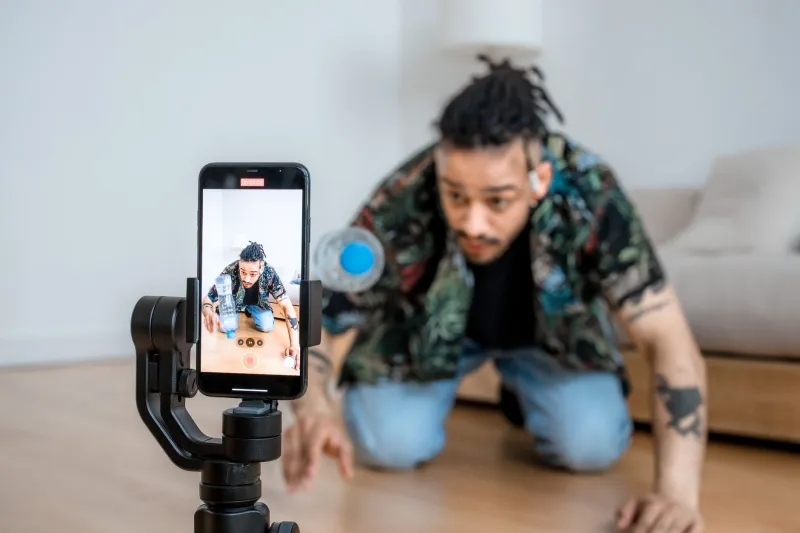
There's a very specific kind of video blowing up on TikTok right now. It's slightly out of focus. The audio cuts out for half a second. The creator shrugs at the end like they're not entirely sure why they made it. It has 2.4 million likes.
This is not an accident.
Welcome to the age of intentional mediocrity — the cultural moment where younger audiences have collectively decided that striving for perfection is, frankly, exhausting, a little dishonest, and maybe even kind of cringe. And here at Ricko Ricko, where we've always believed that doing something twice (even imperfectly) beats doing something once with a ring light and a five-page content strategy, we feel genuinely seen.
The Hustle Culture Hangover Is Real
For a solid decade, American internet culture ran on one fuel: the grind. Every influencer had a perfectly curated feed, a productivity morning routine involving 4 a.m. wake-ups, and a merch line that definitely wasn't a pyramid scheme. The message was clear — if you weren't optimizing every moment of your existence, you were basically failing at life.
Then Gen Z looked at all of that, collectively raised an eyebrow, and said: no thank you.
The psychological backlash to hustle culture didn't happen overnight, but it accelerated hard after 2020. Suddenly, the performance of productivity felt hollow. The glossy Instagram aesthetic started reading less like inspiration and more like a very expensive lie. Therapists were booked out for months. People were tired in a bone-deep way that a motivational podcast couldn't fix.
Into that exhaustion walked intentional mediocrity — not as a defeat, but as a declaration.
Flaws as Features, Not Bugs
Here's the psychological twist that makes this whole movement so fascinating: choosing to be mediocre on purpose requires a significant amount of confidence. It's actually harder than trying to be perfect.
Perfection is a shield. You can always blame the algorithm, the lighting, the timing. But posting something deliberately rough, unpolished, and 'meh' strips away every excuse. You're not saying I tried and failed — you're saying I tried this much, and I'm completely fine with that. That's a power move disguised as a shrug.
Psychologists who study self-presentation theory have long known that perceived authenticity is more compelling than perceived perfection. Humans are wired to trust people who seem real over people who seem curated. What Gen Z figured out — intuitively, without a single research paper — is that you can engineer that authenticity by leaning into imperfection rather than papering over it.
The blurry photo isn't a mistake. It's a statement.
Content Creation in the 'Whatever' Era
The downstream effects on content creation have been genuinely wild to watch. Across YouTube, TikTok, and Instagram, a new aesthetic has emerged that could generously be described as 'vaguely put together.' Voiceovers recorded in cars. B-roll that doesn't quite match the script. Captions that trail off mid-sent—
And audiences are eating it up.
Creators who built their brands on high production value are increasingly finding themselves outflanked by someone filming vertically on a four-year-old iPhone who just seems more fun to hang out with. The parasocial economy has shifted: viewers don't want to watch someone's best self anymore. They want to watch someone's real self, even if that real self sometimes forgets to charge their ring light.
This has created an interesting paradox for the influencer industrial complex. Brands spent years training a generation of creators to be aspirational. Now those same brands are desperately trying to seem relatable, approvisional, and a little bit messy. The pivot is not going smoothly for everyone.
Brands Are Panicking (Quietly)
Nothing captures the corporate confusion around this shift better than watching a Fortune 500 company try to post 'authentically.' You've seen it. The tweet that's trying too hard to be lowercase and unbothered. The Instagram caption that uses 'lol' in a way that feels like it was approved by a committee of forty-seven people.
The brands that have actually cracked the code — Duolingo's unhinged owl, Wendy's perpetually sarcastic Twitter presence, the entire Liquid Death marketing strategy — understood something crucial: intentional mediocrity isn't about lowering quality, it's about lowering pretense. There's a difference between a bad product and a good product that doesn't take itself too seriously.
The brands still struggling are the ones confusing aesthetic messiness with genuine personality. Slapping a lo-fi filter on your ad campaign doesn't make you relatable. Having an actual point of view — even a weird, imperfect one — does.
The Ricko Ricko Principle, Applied to Everything
We'd be lying if we said this trend didn't feel a little personal to us. The whole Ricko Ricko ethos has always been built on the idea that doing something twice — even something silly, even something that doesn't quite land — is more honest than doing something once with maximum polish and minimum soul.
Intentional mediocrity, at its core, is about repetition without shame. It's about making the thing, putting it out there, and not catastrophizing when it's not perfect. It's about understanding that the second attempt, the rough draft, the 'I'll just post it anyway' energy is where most of the actual personality lives.
Gen Z didn't invent this idea. Every great comedian who ever bombed at an open mic and came back the next week already knew it. Every indie filmmaker who shot on a camcorder because that's what they had already understood it. What's new is that an entire generation is applying this philosophy not just to art, but to their identities — to how they present themselves, how they work, how they consume, and what they expect from the culture around them.
Is This Sustainable, or Just a Vibe?
Fair question. There's a real risk that intentional mediocrity becomes its own kind of performance — that the 'I don't care' aesthetic becomes as carefully constructed as the hustle culture it replaced. Some would argue it already has.
But even if that's true, something meaningful is happening underneath the irony. A generation is actively pushing back against the idea that human worth is measured in output, optimization, and personal branding. That's not nothing. That's actually kind of radical, even when it's expressed through a slightly blurry video of someone making toast.
Good enough, it turns out, might be the most honest thing any of us can offer. And if you post it twice? Even better.