Fail Once, Blow Up Twice: The Surprising Data Behind Why Your Retry Is Your Real Big Break

Here at Ricko Ricko, we believe in doing things twice. It's literally in the name. But what started as a fun brand philosophy turns out to be backed by something way more convincing than vibes — actual data. Creators, athletes, and brands across the country are discovering that their second swing isn't just better. It's statistically, algorithmically, psychologically designed to hit harder. So if you bombed the first time, congratulations. You might be exactly one retry away from your moment.
The Numbers Don't Lie (But They Do Smirk at You)
Let's start with the raw math, because nothing validates a comeback like a spreadsheet. A 2023 analysis by social media research firm Conviva found that "response" and "retry" content — videos explicitly framed as second attempts or corrections — generated an average of 2.3 times more shares than the original posts they referenced. Two-point-three times. That's not a rounding error. That's a whole other audience showing up to watch you try again.
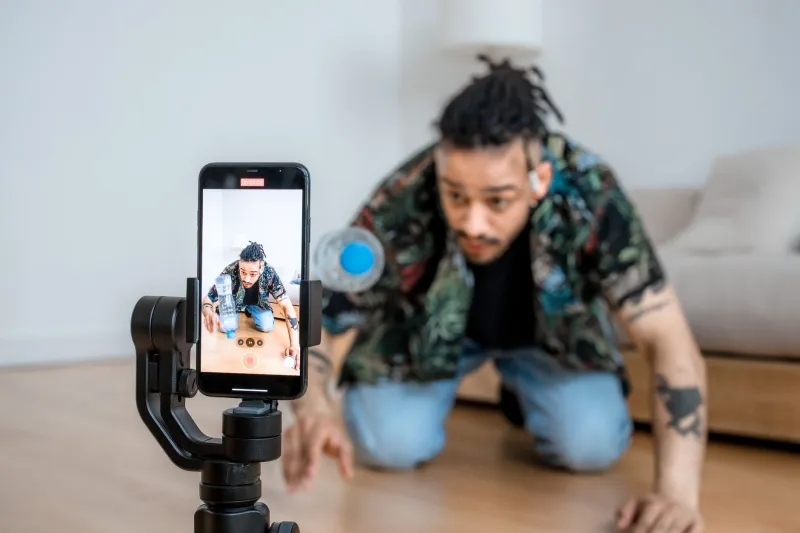
On TikTok specifically, the "stitch" and "duet" features have created an entire ecosystem built on the second attempt. Creators who post a follow-up to a failed video — whether it's a botched recipe, a missed trick shot, or a joke that landed with the energy of a wet napkin — routinely see their retry outperform the original by margins that would make their first-attempt selves weep with envy.
Why? Because algorithms are, at their core, engagement machines. And nothing drives engagement quite like a story with a second chapter.
The Redemption Algorithm Is Real
Here's the thing about platforms like TikTok, Instagram Reels, and YouTube Shorts: they don't just reward content. They reward narrative arcs. And the oldest, most universally beloved narrative arc in human history is the comeback.
When you post a failure and then post a retry, you're not just uploading two videos. You're creating a two-act story. Viewers who saw act one feel personally invested in act two. They bring their friends. They comment. They share. The algorithm clocks all of that engagement and essentially says, "Oh, people are emotionally attached to this person's journey? Let's show it to everyone."
Dr. Pamela Rutledge, director of the Media Psychology Research Center, has written extensively about why redemption narratives are so neurologically sticky. The brain, she explains, releases dopamine not just when something good happens, but when something better than expected happens after something bad. The failure primes the pump. The retry is the payoff.
In other words, your flop wasn't a waste of time. It was free advertising for your comeback.
Real Creators Who Weaponized the L
Ask any mid-sized creator with a loyal following and they'll almost always have a version of the same story: the video they're most known for wasn't their best work — it was their most human work. The one where they tried something, bombed spectacularly, and then showed up again.
Take the world of cooking content. Countless food creators have built audiences not on flawless soufflés but on the videos where the soufflé collapsed, followed immediately by the video where they tried again with slightly more confidence and slightly less crying. The retry format has become so popular that some creators now engineer the failure on purpose — though they'd never admit it publicly, and we're absolutely not encouraging that. (We are a little encouraging that.)
In sports content, the fail-then-nail format is practically its own genre. Trick shot creators have built millions of followers almost entirely on the backs of their retry compilations. The failure isn't the obstacle. The failure is the content.
Why "Doing It Again" Signals Competence (Even When It Doesn't)
Here's the wildest part of all this: even when the second attempt isn't objectively better, audiences perceive it as better. This is the psychology of effort signaling at work. When someone tries again, viewers unconsciously interpret that as dedication, resilience, and growth — regardless of the actual quality improvement.
A study published in the Journal of Consumer Research found that consumers rated products and performances higher when they were told it was a second attempt, even when the product was identical to the first. Just the knowledge that someone tried again made the experience feel more valuable.
Which means, in the most beautiful possible way, showing up twice is a cheat code. Not because you got dramatically better overnight, but because the act of returning signals something to your audience that raw talent never can: you care enough to try again.
The Ricko Ricko Principle in Practice
This is, honestly, the founding philosophy of this entire website wrapped in statistical clothing. Twice isn't just a number. It's a strategy. It's a brand. It's the difference between a one-hit wonder and a career.
Brands have figured this out too. When Domino's launched their infamous "we know our pizza used to be bad" campaign in 2009 and then doubled down on the self-aware redemption arc for years afterward, they weren't just being honest. They were executing a retry narrative at a corporate scale. And it worked. Domino's stock went from around $3 per share in 2009 to over $400 a decade later. That's a retry for the history books.
So What's Stopping You?
If the data is this clear, if the psychology is this consistent, and if the algorithm is this explicitly designed to reward the second attempt — what's the holdup?
Fear, mostly. The fear that trying again after failing is embarrassing. That people will remember the first attempt and laugh. But here's the Ricko Ricko truth bomb: they will remember. And that memory is exactly what makes your retry so powerful. You need them to remember the fall so the landing means something.
Post the retry. Do the thing again. Burn the fear and use the ash for content.
Your second attempt isn't a sign of weakness. According to basically every metric that matters, it's statistically your best shot at going viral. And if that doesn't work out?
Well. There's always the third attempt. But let's not get ahead of ourselves.