Heard It Twice, Loved It More: The Calculated Comedy Strategy Behind Performing the Same Bit Everywhere
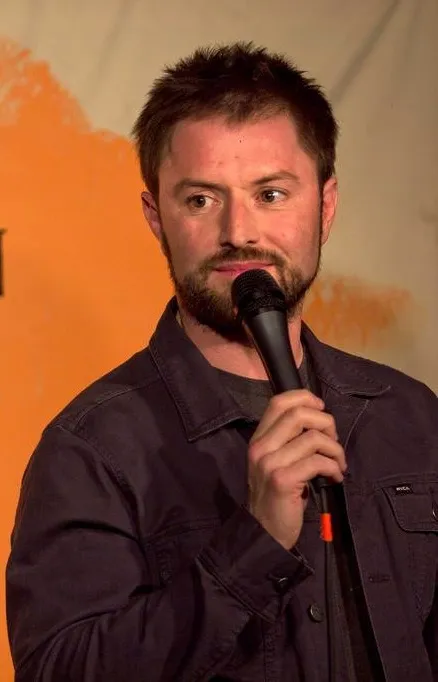
Photo: Salvador Calyso, CC BY-SA 3.0, via Wikimedia Commons
Here at Ricko Ricko, we believe everything worth doing is worth doing twice. Turns out, the best comedians in America figured that out way before we put it in our tagline.
You've been there. You're watching a Netflix special, and a comedian drops a bit so perfectly constructed that you nearly spit out your overpriced sparkling water. Three weeks later, you see a clip on your timeline — same comedian, same joke, this time on The Tonight Show. And somehow, impossibly, you laugh just as hard. Maybe harder. Then the SNL cameo hits, and the cycle completes itself like some glorious comedy ouroboros.
This isn't laziness. This isn't a scheduling accident. This is strategy, baby — and it's a lot smarter than it looks.
The Economics of Killing the Same Joke Twice
Let's talk money for a second, because comedy is, at its core, a business. When a comedian lands a genuinely great bit — the kind that makes a room of strangers feel like best friends for four minutes — there's a very real financial incentive to extract every last laugh out of it across every available platform.
A late-night spot on Fallon or Kimmel reaches a live broadcast audience that skews older and slightly more casual. A Netflix special pulls in binge-watchers who are already committed fans, sitting at home in sweatpants with a snack. An SNL appearance grabs a younger, culturally-plugged-in crowd who will immediately clip it and post it everywhere. These are three almost entirely different audiences — and a comedian who nails the same bit across all three isn't being repetitive. They're being surgically efficient.
Comedians have openly talked about this approach in podcast interviews and press junkets. The consensus is remarkably consistent: you road-test material for months in small clubs, you identify the bits that hit every single time regardless of the crowd, and those are the ones you take to the big stages. Not the risky stuff. The proven stuff. The stuff that's basically already been tested like a pharmaceutical drug — except instead of FDA approval, you need a solid run of Tuesday nights in Burbank.
Why Audiences Don't Just Tolerate It — They Actually Prefer It
Here's the counterintuitive part. You'd think audiences would feel cheated watching recycled material. Like ordering a meal at a restaurant and realizing the chef is just reheating something from last Tuesday. But that's not what happens at all.
Repetition, in comedy, creates a kind of cultural ownership. When you've already heard a bit once — even subconsciously, even just as a clip you scrolled past — hearing it again in a new context feels like being in on something. You're not watching a comedian tell a joke. You're watching your joke get validated in front of a new audience. You are, in a very real sense, the early adopter. The comedy tastemaker. The person who was there before it was cool.
This is the Ricko Ricko Effect in its purest form: doing the thing twice doesn't dilute the experience. It doubles the investment. The second time around, you're not just laughing at the punchline — you're laughing at the fact that you already knew the punchline was coming and it still got you.
The Viral Architecture Hidden Inside the Double-Dip
There's also something deeply intentional happening on the marketing side of all this. Comedy writers and PR teams have quietly figured out that a bit doesn't go viral from a single appearance — it goes viral from momentum.
The late-night clip gets posted. It gets maybe 200,000 views and a decent amount of retweets. Not a phenomenon, but a spark. Then the Netflix special drops, and suddenly everyone's sharing the same bit again — this time in higher quality, with better lighting, and a longer setup. The algorithm serves the original clip to new people. The special clip gets compared to the original clip. Think pieces get written about the comedian's "evolution." The bit, which was already funny, is now also culturally significant.
It's a two-step detonation. The first appearance lights the fuse. The second one sets off the actual explosion.
Comedians like John Mulaney, Ali Wong, and Hannah Gadsby have all benefited from this kind of slow-burn viral architecture. A bit from a smaller set starts making the rounds, builds anticipation for a larger special, and by the time the special drops, there's already an audience primed and ready to receive it. They're not just watching something new — they're completing a journey they already started.
The Club Comics Who Do It on Hard Mode
Of course, not everyone has a Netflix deal and a Fallon slot. For working club comics grinding through the circuit — doing sets in Cincinnati on a Thursday, then flying to Austin for a Friday show, then catching a red-eye to New York for a weekend run — the repetition game plays out on a smaller but no less intentional scale.
These comics will do the same tightly-wound 45-minute set for months, sometimes years, refining individual words and pauses the way a jeweler refines a setting. They'll perform the same bit in front of a college crowd, then a corporate crowd, then a late-night bar crowd, cataloging exactly which lines land differently depending on the room. By the time that material makes it onto a proper special, it's not a first draft. It's been through more test runs than most Hollywood blockbusters.
The repetition isn't the product. The repetition makes the product.
So What Does This Mean for You, the Viewer?
Next time you catch a comedian doing a bit you've already seen — don't groan. Don't reach for the remote. Lean in. Because you're watching something that has been pressure-tested, audience-approved, and strategically deployed for maximum impact. You're not watching a comedian phone it in. You're watching a comedian at the absolute peak of their confidence in a piece of material.
And honestly? That second laugh — the one you already knew was coming — might just be the best laugh of your week.
Twice the bit. Double the funny. That's the Ricko Ricko way.