Fool Me Twice, I'll Still Buy the Merch: The Strange Loyalty Loop of Celebrity Fandom
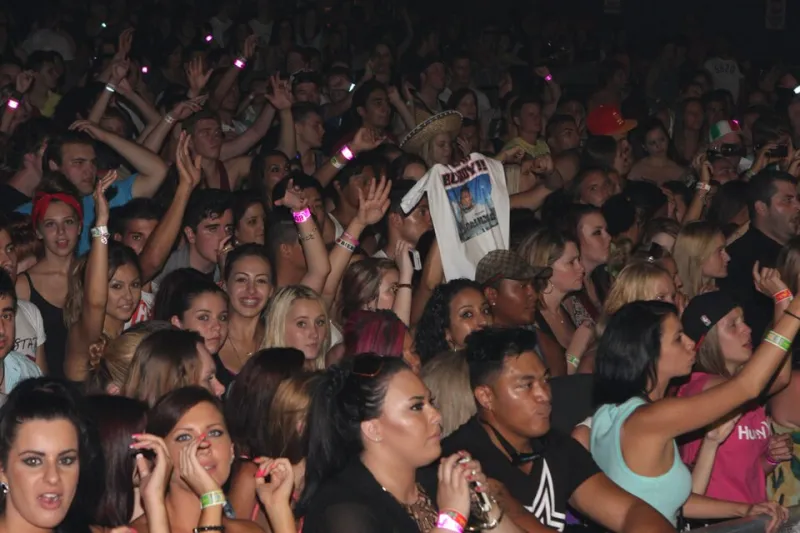
Photo: Eva Rinaldi from Sydney, Australia, CC BY-SA 2.0, via Wikimedia Commons
Let's be honest with ourselves for a second. You've said it. I've said it. We've all leaned into a group chat and typed some version of "I am DONE with them." Maybe it was after a tone-deaf Instagram post. Maybe it was after that album nobody asked for. Maybe it was after the third poorly received Netflix special in a row. And then — three weeks later — there you are, watching their comeback interview on YouTube at 11:45 PM, rooting for them like they're your cousin trying to make rent.
Welcome to what we here at Ricko Ricko are officially dubbing The Ricko Effect: the strange, stubborn, deeply human tendency to give our favorite celebrities not just a second chance, but a third, a fourth, and sometimes a frankly embarrassing fifth. It's not stupidity. It's not weakness. It's psychology, baby — and it's a lot more interesting than it sounds.
You Don't Actually Know Them (But Your Brain Disagrees)
Here's the uncomfortable truth sitting at the center of all this: parasocial relationships are real, they are powerful, and they are absolutely messing with your judgment.
A parasocial relationship is what happens when you consume so much of a person's content — their interviews, their podcasts, their Instagram Stories where they show you their fridge — that your brain starts filing them under "people I know" rather than "strangers who happen to be famous." Psychologists have studied this for decades, and the conclusion is consistently wild: your emotional response to a celebrity disappointment can mirror the feelings you'd have if a real friend let you down.
So when Justin Timberlake had his rough patch in the public eye, or when your favorite comedian got caught saying something deeply uncool, the sting felt personal. Because to your limbic system, it kind of was.
But here's the flip side — and this is where The Ricko Effect kicks in — that same sense of familiarity that makes the betrayal hurt also makes the forgiveness feel natural. You wouldn't cut off a friend over one bad year. And your brain, bless its pattern-loving little heart, extends that same grace to people you've never met.
The Comeback Formula (It's Not That Complicated)
Some celebrities have practically turned the public redemption arc into a performing art. Let's look at the pattern, because there absolutely is one.
Step one: The mess. A scandal, a flop, a public meltdown, or a controversial opinion delivered with the confidence of someone who did not think it through. The internet catches fire. Think pieces multiply. Saturday Night Live does a bit.
Step two: The disappearance. Strategic silence. Maybe a quiet charity donation. A very normal-looking photo with a dog. The celebrity machine goes into hibernation mode.
Step three: The soft return. A podcast appearance where they're refreshingly honest. A project that's clearly a departure from whatever got them in trouble. A headline that uses the word "vulnerable."
Step four: You, watching it all, thinking "okay, they seem different."
Robert Downey Jr. built an entire second chapter of his career — arguably the most commercially successful chapter — after a period in the early 2000s that could charitably be described as chaotic. Martha Stewart went to federal prison and came back as a cultural icon who does Super Bowl commercials. Britney Spears's story is complicated and worth more nuance than a comedy article can offer, but the loyalty of her fanbase through a decade of institutional struggle is a textbook case of parasocial bonds holding firm under extraordinary pressure.
The formula works because audiences want it to work. A comeback confirms something we all secretly hope is true about ourselves: that our worst moments don't define us permanently.
The Flop Era Is Now a Feature, Not a Bug
Something genuinely fascinating has happened in the last several years of internet culture: the flop era has been rehabilitated. Where a failed project once carried a career-ending stigma, it now sometimes functions as a relatability badge. Fans rally around celebrities who swing and miss with an almost protective energy. The discourse around a poorly reviewed film or a universally dunked-on album can actually deepen the emotional investment of an already-committed fanbase.
Taylor Swift's Reputation era is instructive here. Critics were skeptical, casual listeners were confused, and the internet had opinions. Her core fanbase treated that album like a bunker — they went in on it harder precisely because it felt embattled. The same dynamic played out with Kanye West's more experimental projects, with Adam Sandler's theatrical output, with virtually every phase of Nicolas Cage's career that wasn't the peak-prestige Nicolas Cage period.
Nicolas Cage, actually, is maybe the purest expression of The Ricko Effect in Hollywood. The man has made movies that critics described using words typically reserved for natural disasters. He has also delivered some of the most genuinely committed, fascinating performances in American cinema. His fans — and they are devoted — hold both of these things simultaneously and feel no contradiction. That's not delusion. That's a fully operational parasocial relationship doing exactly what it was built to do.
When the Effect Runs Out
To be fair — and Ricko Ricko is nothing if not balanced — The Ricko Effect does have limits. Not every celebrity gets infinite second chances, and the pattern of forgiveness is not evenly distributed across demographics, gender, or the nature of the original offense. Audiences are quicker to forgive some transgressions than others, and the history of who gets redemption arcs and who doesn't is worth examining honestly, even in a humor piece.
But beyond the ethical calculus, there's also just simple audience fatigue. At some point, the comeback narrative itself becomes the joke. When a celebrity has had their "they're finally figuring it out" moment four or five times, even the most loyal fans start quietly updating their priors.
The sweet spot — the place where The Ricko Effect operates at full power — is the single, significant stumble followed by a genuine-seeming reinvention. One dramatic fall, one compelling return. It's a story structure audiences recognize from every hero's journey they've ever consumed. It maps onto the same emotional template as every underdog sports movie, every redemption arc in prestige television, every country song about getting back up.
Which might be the most honest answer to the question of why we keep coming back: we're not really following celebrities. We're following a story. And a story that goes twice — the rise and the fall and the rise again — is almost always more interesting than one that only goes once.
So yeah. You're going to watch the comeback special. We all are. And honestly? Good for you.