Hollywood's Second-Helping Problem: Why Studios Can't Stop Making Sequels and We Can't Stop Buying Tickets
Let's be honest with each other for a second, in the warm, judgment-free space that is Ricko Ricko dot com. You have, at some point in the recent past, paid money to see a sequel that you knew — knew in your bones — was probably going to be worse than the original. You went anyway. You might have even enjoyed yourself, in that specific way you enjoy a meal that isn't quite as good as you remembered but still hits the spot at 8 PM on a Friday.
You are not alone. You are, in fact, the majority. And Hollywood has built an entire industrial empire on top of that specific flavor of comfortable disappointment.
Welcome to the sequel economy. Population: all of us.
The Math That Makes Sequels Inevitable
To understand why studios are seemingly incapable of not making sequels, you have to understand the financial logic, because it is absolutely iron-clad from a purely capitalist standpoint.
A new intellectual property — a wholly original movie with no existing brand recognition — is an enormous gamble. Studios spend hundreds of millions on production and marketing, then essentially hold their breath and hope audiences show up for something they've never heard of before. Sometimes it works brilliantly. Often it doesn't. The risk is real and the failure rate is sobering.
A sequel, by contrast, arrives pre-loaded. The characters are known quantities. The world is established. The marketing writes itself because the audience already has an emotional relationship with the material. According to data from the-numbers.com, sequels consistently outperform original films at the domestic box office — on average, a franchise sequel earns roughly 70 to 90 percent of what its predecessor made, even when reviews are significantly worse. That's not a coincidence. That's brand loyalty operating at a cinematic scale.
From a studio executive's perspective, the calculus is almost insultingly simple: why bet on an unknown when you can bet on something people have already proven they'll pay for? The sequel isn't a creative decision. It's a financial one dressed up in a leather jacket and a familiar catchphrase.
The Nostalgia Industrial Complex
But pure economics only explains part of the picture. The other part is something far more primal: nostalgia, and Hollywood's increasingly sophisticated ability to weaponize it.
Neuroscientists have documented what they call the "reminiscence bump" — the tendency for people to have particularly strong emotional attachments to cultural experiences from their adolescence and early adulthood. Movies, TV shows, and music from those formative years don't just feel familiar. They feel meaningful in a way that new content often can't replicate, no matter how good it is.
Studios know this. They have known this for decades. Which is why the current wave of sequels, reboots, and franchise revivals isn't random — it's demographically targeted with the precision of a heat-seeking missile. The Top Gun: Maverick release in 2022 wasn't just a sequel. It was a calculated appeal to the exact generation that grew up watching the original in theaters and now has both disposable income and a deep, aching hunger for the feeling of being 15 again. It grossed $1.49 billion worldwide. The strategy worked.
The uncomfortable truth is that nostalgia is not just a feeling. It's a marketing category. And audiences participate willingly, even knowingly, because the feeling it produces is genuinely pleasurable even when you can see the machinery behind it.
What Screenwriters Actually Think (When They're Not Optimizing for IP)
Talk to working screenwriters in Hollywood — off the record, because their careers depend on it — and you'll hear a consistent frustration. The sequel mandate doesn't just affect which movies get made. It affects how movies get made, from the inside out.
When a studio greenlights a sequel before the first film is even finished, it creates a specific kind of creative pressure. The story can't actually end. Characters can't die or grow beyond a certain point. Conflicts have to remain unresolved enough to sustain future installments. The narrative is, from conception, designed less as a story than as a container for future content.
"You're not writing a second chapter," one veteran screenwriter explained in an interview with The Atlantic. "You're writing a product line."
This is the creative cost that rarely shows up in the box office data. Sequels don't just risk being worse than their predecessors — they actively constrain the storytelling of the entire franchise from the moment the first installment becomes a hit. The success of the original is, paradoxically, what guarantees the creative limitations of everything that follows.
And Yet. And Yet.
Here's the part where we have to be fair to the format, because Ricko Ricko believes in giving credit where it's due, even when it's inconvenient.
Some sequels are genuinely great. The Godfather Part II is widely considered superior to the original. The Dark Knight elevated its predecessor into something approaching mythology. Toy Story 2 and Toy Story 3 are legitimately moving films that justify their existence entirely on creative merit. Aliens took the quiet dread of Alien and turned it into a completely different kind of masterpiece.
Sequels are not inherently bad. The idea of sequels is not the problem. The problem is the industrial pressure to produce them on a schedule determined by a quarterly earnings call rather than a story that actually has somewhere to go.
The difference between a good sequel and a bad one is almost always the same: did anyone actually have something new to say, or were they just showing up because the contract required it?
Why We Keep Watching Anyway
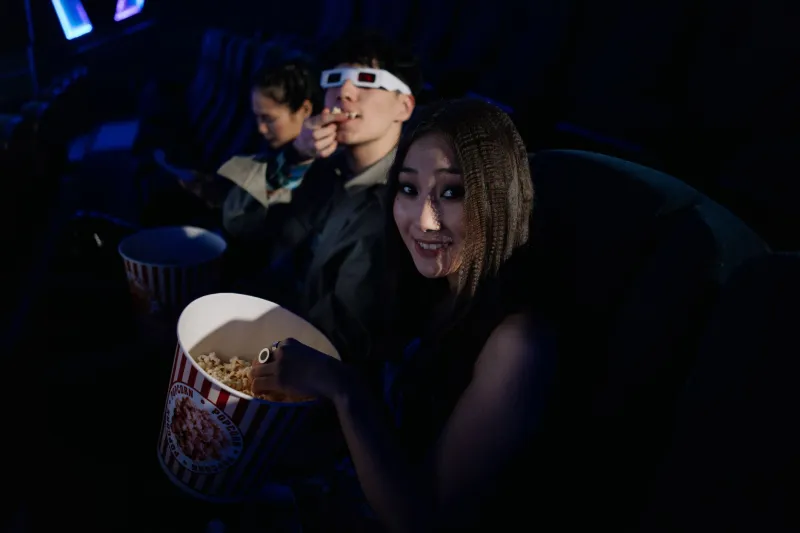
This brings us back to you, large popcorn in hand, sitting in a theater for a sequel you had real doubts about. Why are you there?
Probably several reasons at once. Habit. Social obligation. The genuine hope that this one will recapture whatever the original made you feel. The low-stakes pleasure of spending two hours in a world you already know. The fact that the alternative — taking a chance on something completely new — carries its own risks of disappointment.
Audiences aren't stupid for watching sequels. They're human. The known quantity is comforting in a world that offers very little comfort. And sometimes, against all odds, the sequel actually delivers.
The Ricko Ricko Verdict
Hollywood's sequel obsession isn't going anywhere, because the economics are too good and the audience appetite is too consistent. Studios will keep making them. We will keep watching them. Some will be cynical cash grabs. A few will be genuine triumphs. Most will land somewhere in the comfortable middle, which is honestly fine.
The real question isn't whether sequels are good or bad. The real question is whether the industry will ever find the discipline to make a second installment only when there's actually a second story worth telling.
Given current trends: probably not. But hey — at least the popcorn is good.
And if the sequel disappoints? There's always the threequel. We'll be there. You know we will.