Back Again Already? How Celebrities Turned the Repeat Appearance Into a Power Move
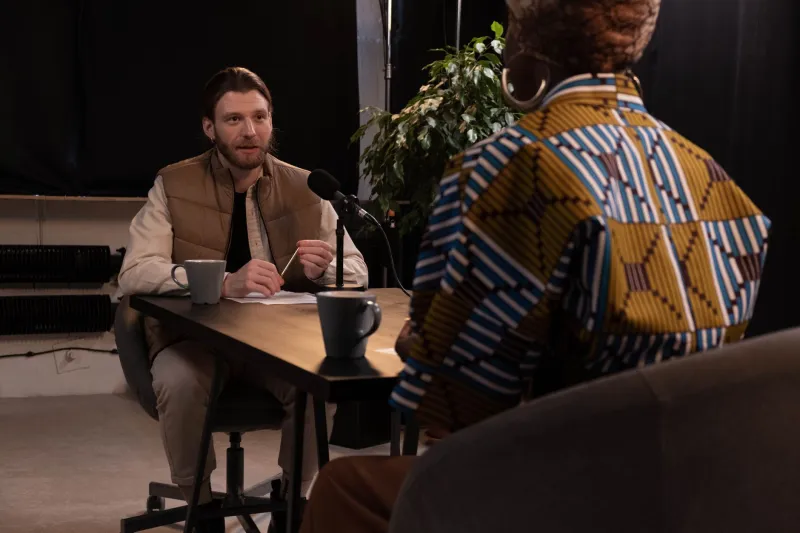
There's a specific kind of energy that fills a late-night studio when a celebrity walks back through the same door they exited three months ago. The audience claps a little harder — partly out of genuine excitement, partly out of the collective confusion of wait, weren't you just here? And yet, nobody changes the channel. Nobody logs off the podcast. Everyone leans in.
Welcome to what we at Ricko Ricko are officially dubbing the Ricko Effect: the strange, counterintuitive phenomenon where coming back for seconds actually makes you more interesting than you were the first time around.
The Couch Is Always Warm
Let's set the scene. A major celebrity — let's say someone riding the wave of a blockbuster, a viral moment, or a carefully engineered comeback — books their obligatory press run. They hit The Tonight Show, sit down with Conan's podcast, maybe do a two-hour stretch on Hot Ones while their sinuses slowly disintegrate. Standard stuff.
Then, roughly eight to twelve weeks later, they're back. Same desk. Same hot sauce. Same host pretending they haven't already covered this person's entire childhood trauma and box office numbers.
Conventional wisdom says this should feel stale. Conventional wisdom, as usual, is wrong.
The psychology behind the repeat visit is surprisingly rich. Familiarity, when it's managed correctly, doesn't breed contempt — it breeds comfort. Audiences who liked someone the first time around are essentially pre-warmed leads for the second appearance. They already have an opinion, they already have a rooting interest, and now they're watching to see if this person can deliver again. It's the same reason you rewatch your favorite sitcom episodes. You're not looking for surprises. You're looking for confirmation that the thing you liked was real.
The Pressure of the Return
Here's where it gets genuinely interesting, though: the second appearance carries a completely different kind of pressure than the first.
Your debut on a platform is about introduction. Your repeat visit is about justification. You have to answer, even if nobody asks out loud, why are you back? The celebrities who understand this walk in with fresh material, a new angle, or at minimum a story they conspicuously held back the first time. It's almost theatrical — the calculated reveal of the thing you were saving.
Demi Moore's press run for her memoir and subsequent film work is a decent case study here. Each return engagement peeled back a different layer, making each appearance feel like its own chapter rather than a reprint of the last one. Jennifer Coolidge has mastered a different version of the same trick — she's essentially weaponized her own persona so thoroughly that every appearance feels like a fresh comedy performance even when she's technically saying similar things. The material renews itself because she renews it.
Then there's the other camp. The celebrities who return with nothing new to say, no new gear engaged, just a vague sense that their publicist booked something and they showed up. These appearances have a specific texture — a low-grade awkwardness that hosts are professionally trained to paper over. The audience can feel it anyway. It's the entertainment equivalent of reheated fries: technically the same food, but something essential has left the building.
The Podcast Circuit's Unique Problem
Long-form podcasts have made the repeat appearance both more common and more nakedly obvious. When you're sitting across from Joe Rogan or Alex Cooper for three hours, there is nowhere to hide. The first visit can run on charm and novelty. The second visit requires actual depth, because the host has already asked you the easy questions and the audience has already heard your rehearsed answers.
Some celebrities have figured out that the podcast return works best when something has actually changed. A new project, sure, but more importantly a new perspective — a shift in how they're talking about their life or work. The guests who bomb their second podcast appearance are almost always the ones who treat it like a press obligation rather than a genuine conversation. Audiences who spend three hours with someone develop a finely tuned radar for authenticity, and they will absolutely clock when you're just running the highlight reel again.
The guests who crush the return? They tend to bring receipts. Something they couldn't say before. A development in a story the audience was already invested in. They understand that the second appearance is essentially a sequel, and like any good sequel, it needs to honor the original while moving the story somewhere new.
Mastering the Graceful Return
So what separates the celebrities who make the repeat appearance feel like an event from those who make it feel like a scheduling accident?
A few patterns emerge when you look at the ones who get it right:
They treat the host like a collaborator, not a backdrop. The best return guests have clearly watched or listened to the previous appearance. They reference it, they build on it, they create a throughline that rewards loyal viewers.
They know what they're selling — and it isn't always a product. The most effective second appearances aren't really about the movie or the album or the book. They're about deepening the audience's relationship with the person. The project is just the ticket to get back in the room.
They leave something on the table. The celebrities who turn repeat appearances into a sustainable strategy understand pacing. You don't dump everything in one sitting. You give the audience a reason to tune in the third time, too.
They're comfortable with the awkwardness. There is almost always a moment in a repeat appearance where someone acknowledges the meta-reality of the situation — you were just here! — and the celebrities who lean into that moment with genuine humor instead of deflecting it tend to come out ahead. Self-awareness is disarming. It tells the audience you know exactly what's happening and you're in on the joke.
The Double-Dip as a Brand Strategy
Zoom out far enough and the repeat appearance stops looking like a press tactic and starts looking like a brand architecture decision. The celebrities who do this most effectively aren't just promoting things — they're building ongoing relationships with specific audiences through specific platforms. Each return visit is another deposit in the familiarity bank.
It's not unlike what we celebrate here at Ricko Ricko, honestly. There's something genuinely powerful about showing up twice and making both times count. The first time you introduce yourself. The second time, you prove you meant it.
The celebrities who understand that distinction aren't overstaying their welcome. They're earning their next invitation before the current one is even over. And the audience — always smarter than the industry gives them credit for — knows the difference between someone who showed up twice because they had something to say and someone who showed up twice because their team needed the coverage.
One of those is the Ricko Effect. The other is just reruns nobody asked for.